What Are Social Drivers of Health?
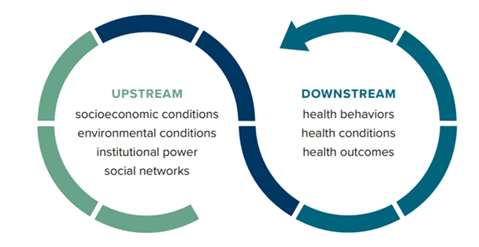
Social Drivers of Health, or the conditions in which people are born, grow, live, play, work, and age, are shaped by the distribution of money, power, and resources. Factors such as socioeconomic conditions, environmental factors, institutional power, and social networks are considered “upstream” because they occur earlier in the chain and ultimately impact characteristics further “downstream” (e.g., health behaviors, conditions, and outcomes).
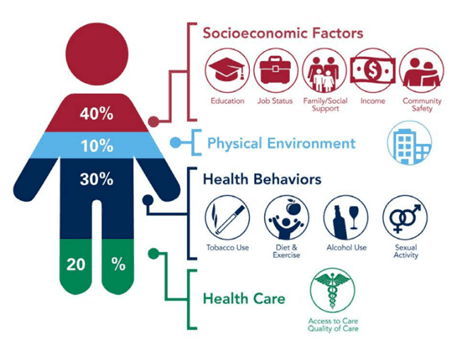
The Robert Wood Johnson Foundation estimates that only 20 percent of health outcomes can be attributed to clinical care. Upstream social drivers of health account for the other 80 percent, including social and economic factors (40 percent), physical environment (10 percent), and health behaviors (30 percent).
California Social Health Network (2018-2024)
The California Social Health Network (CSHN), active from 2018 to 2024, aimed to facilitate information exchange on systemic barriers related to social needs, fostering collaboration at regional and state levels to address SDOH. Focusing on the value of cross-sectoral partnerships, CPCA led discussions to explore how CHCs tackled SDOH, bringing statewide leaders together to cultivate relationships for collective initiatives that impacted the health, well-being, and quality of life for Californians.
CSHN Recorded Meetings
Questions
If you have any questions, or need more information regarding social drivers of health please email sdoh@cpca.org.